

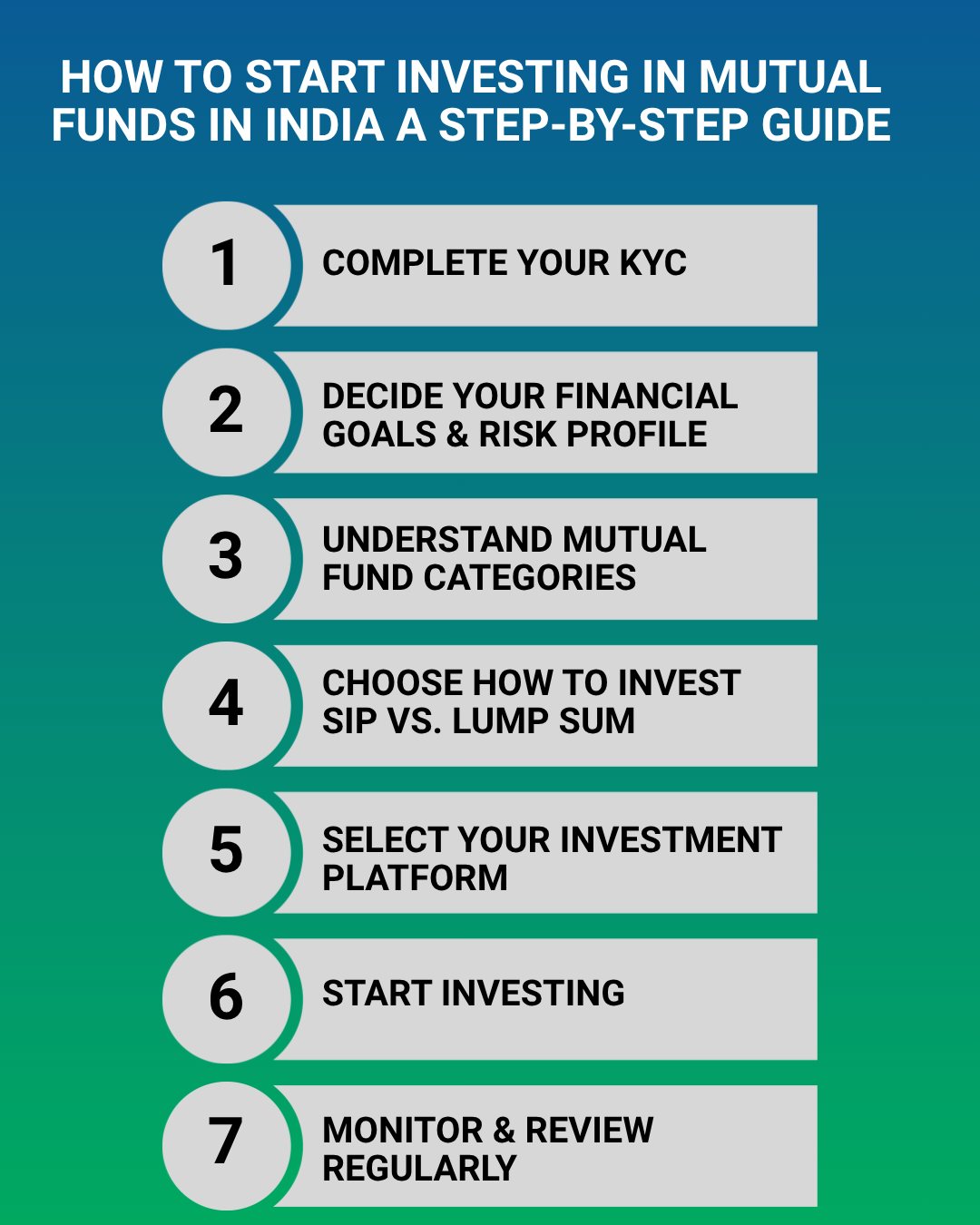
Investing in mutual funds is the easiest way to grow your money, build wealth for the future, and achieve financial goals such as retirement, children’s education, or buying a home. If you’re new to investing, this step-by-step guide will walk you through everything you need to know to start investing in mutual funds in India with confidence.
Introduction: Why Invest in Mutual Funds?
Mutual funds are one of the most popular investment vehicles in India. They allow you to pool your money with other investors and let professional fund managers invest it in stocks, bonds, or other financial assets. This provides diversification, professional management, and ease of investing, especially for beginners.
According to Dreams Finco, they offer customized mutual fund solutions, secure digital transactions through NSE/BSE platforms, and paperless video KYC options making investing seamless and beginner friendly.
Step 1: Complete Your KYC (Know Your Customer)
Before you can invest, you must complete your KYC. KYC is mandatory for all mutual fund investors in India and is required by SEBI to verify identity and prevent financial fraud.
Documents You’ll Need:
- PAN Card (mandatory)
- Aadhaar Card (identity & address)
- Bank account details (for transactions)
- Recent photograph
How to Do KYC:
- Online KYC: Many platforms (including Dreamsfinco’s video KYC) allow 100% paperless completion.
- Offline KYC: Visit a KRA (KYC Registration Agency) or mutual fund distributor branch.
Once KYC approval is complete, you can start investing in any mutual fund scheme across India.
Step 2: Decide Your Financial Goals & Risk Profile
Investing without a goal is like sailing without a compass. Before choosing funds, ask yourself:
- Why am I investing? (Retirement, wealth creation, tax saving, child’s education)
- What is my time horizon? (Short-term vs long-term)
- What level of risk am I comfortable with?
Your risk profile determines whether you should pick equity funds (high risk, long-term growth), debt funds (low risk, stable returns), or hybrid funds (balanced).
Step 3: Understand Mutual Fund Categories
Here’s a simplified overview of the main mutual fund types you can invest in India:
1. Equity Mutual Funds
- Invest in stocks
- Ideal for long-term goals (5+ years)
- Higher growth potential, higher risk
2. Debt Mutual Funds
- Invest in fixed-income securities
- Lower risk, stable returns
- Good for conservative investors
3. Hybrid Funds
- Mix of equity and debt
- Balanced risk and returns
Investing You should choose funds based on your goals and risk tolerance not just past performance.
Step 4: Choose How to Invest SIP vs. Lump Sum
One of the biggest beginner decisions is how to invest your money:
Systematic Investment Plan (SIP)
A SIP allows you to invest a fixed amount at regular intervals (e.g., monthly).
Benefits:
- Rupee cost averaging
- Encourages discipline
- Start with as little as ₹100–₹500
- Ideal for beginners
Lump Sum Investment
Investing a large amount at once.
Benefits:
- Better if the market is favourable
- High returns potential if timed well
Beginners are often encouraged to start with SIPs for consistent wealth building.
Step 5: Select Your Investment Platform
You can invest in mutual funds via:
1. Directly Through AMCs
- Many Asset Management Companies (like HDFC MF, SBI MF) let you invest directly on their websites.
- Lower costs (no distributor commissions)
- Transparent fees
Pros
- Lower Expense Ratio – No distributor commission, so returns are higher over time
- Better Long-Term Gains – Even 0.5–1% cost savings compounds significantly
- Transparent Charges – Clear fee structure with no hidden costs
Cons
- No Professional Guidance – No advisor to help select funds or plan goal
- Time-Consuming Research – You must analyze funds, risk, and allocation yourself
- Emotional Decisions Risk – DIY investors may panic during market volatility
- No Portfolio Monitoring Support – Rebalancing and reviews are your responsibility
- Complex for Beginners – Can be confusing without financial knowledge
2. Online Platforms / Apps
Apps and fintech platforms like dreams financial consultancy where website client registration lets you invest across multiple fund houses from one place.
- Easy to use
- Quick onboarding
Dreams Financial Consultancy – Advantages
- Personalized Financial Planning – Customized investment strategies based on your goals, income, and risk profile
- Expert Guidance – Professional advice from experienced financial consultants, not just app algorithms
- Goal-Based Investing – Planning for retirement, child’s education, wealth creation, tax saving, and mor
- Portfolio Monitoring & Rebalancing – Regular reviews to keep investments aligned with market change
- Human Support Anytime – Direct assistance for queries, market concerns, and decision-making
- Access to Multiple Fund Houses – Get the flexibility of platforms with expert filtering of best fund
- Tax & Wealth Optimization – Strategic tax-saving and long-term wealth-building approach
- Behavioral Discipline – Prevents emotional investing during market ups and downs
- End-to-End Service – From onboarding to claims, redemptions, and documentation support
Because investing is not just about convenience it’s about making the right decisions.
Dreams Financial Consultancy helps you invest smarter, not just faster.
3. Financial Advisors / Distributors
If you want expert guidance like the personalized service offered by Dreams Finco a SEBI-registered advisor can help with goal planning, fund selection, and ongoing reviews.
Step 6: Start Investing
Once your KYC is done and you’ve chosen your funds:
- Enter investment amount
- Select SIP frequency or lump sum
- Complete payment via online banking or UPI
- Receive units at NAV (Net Asset Value)
This marks the official start of your mutual fund journey. Congratulations!
Step 7: Monitor & Review Regularly
Mutual fund investing is a long-term game. Avoid reacting to day-to-day market swings. Instead:
- Review portfolio performance periodically
- Make adjustments when financial goals change
- Rebalance asset allocation to control risk
Dreams Finco offers regular portfolio reviews, ensuring your investment stays aligned with your goals.
Investing in mutual funds is one of the most effective and disciplined ways to build long-term wealth and achieve your financial goals in India. With simple steps like completing your KYC, selecting the right funds, and investing through SIPs, even first-time investors can create a strong and growing portfolio.
But while starting is easy, staying consistent and making the right choices is what truly makes the difference.
That’s where Dreams Financial Consultancy comes in. We don’t just help you invest; we help you plan, strategize, and grow with expert guidance, personalized portfolios, and continuous support. From fund selection to regular reviews and goal-based planning, we ensure your money works smarter for you.
Start early. Stay consistent. Invest with the right guidance.
With Dreams Financial Consultancy, your financial goals aren’t just dreams they become a clear, achievable plan.